

December 2025
The Talent Required to Run Lights Out Manufacturing Operations
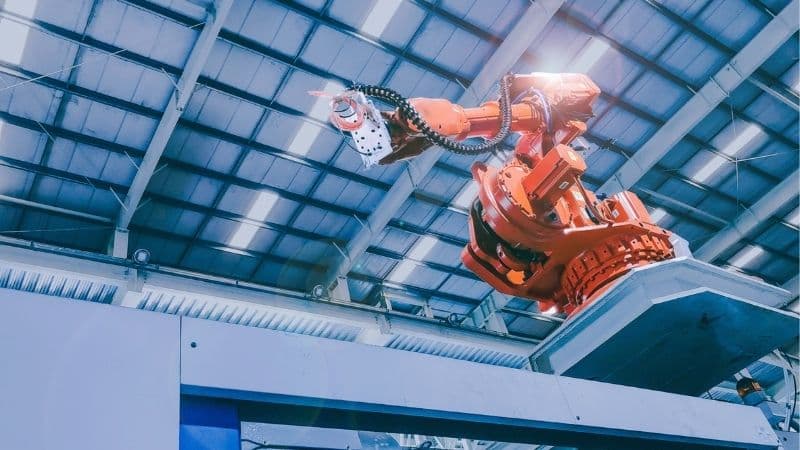
Lights out manufacturing refers to production that runs without people on the shop floor, such as robots, control systems, and automated inspection that manage material flow, assembly, and packaging. Adoption continues to rise as manufacturers respond to labor shortages, cost pressure, and demand for predictable output.
As lights out manufacturing scales, technology is no longer the constraint. Talent is. Engineering depth, project execution, and maintenance capability now determine uptime, yield, and delivery reliability.
What does lights-out manufacturing involve
A lights-out manufacturing environment relies on deterministic machine logic, real-time feedback, and automated quality control. Equipment must operate for extended periods without manual correction. Control systems manage every state change, and failures must remain contained until staff return.
Many manufacturers operate at partial lights-out maturity. Experience shows that unattended production only works when process design, controls engineering, and maintenance function as a single system. Weakness in any one area increases downtime risk.
Companies already using lights-out manufacturing
Here are examples showing how lights-out production works in real operations and how different industries have adapted the model to improve stability, quality and throughput:
FANUC
FANUC is one of the clearest examples of true lights-out manufacturing. Their factories in Japan have operated extended autonomous production for over twenty years. Robots weld, machine, assemble and test other robots with extremely limited human input. Many production cells run for weeks with no on-floor staff, relying instead on remote monitoring to track performance and escalate exceptions. FANUC’s approach shows how long-running, predictable automation can scale when equipment is built for endurance and the support teams focus on preventative work rather than intervention. For supply chains, FANUC demonstrates how high-precision components with tight tolerances can be produced in stable, uninterrupted cycles, reducing delivery risk and increasing consistency.
Philips
Philips’ facility in the Netherlands demonstrates how lights-out principles fit consumer goods. The plant uses 128 robots to assemble electric razors, handling tasks like handling, fastening, testing and packaging. Production relies on standardized parts, predictable workflows and automated inspection. Instead of traditional assembly lines with dozens of operators, Philips uses a small technical team to oversee process stability and perform adjustments during defined maintenance windows. This setup reduces manual variability, cuts labor exposure and delivers consistent cycle times, which supports downstream supply chain planning.
Why does lights-out manufacturing continue to grow
Labor availability remains a constraint, particularly for night shifts and skilled technical roles. Lights-out manufacturing reduces reliance on positions that are increasingly difficult to staff.
Automated lines also deliver:
- Predictable cycle times
- Higher equipment utilization
- Lower scrap and rework
- Consistent quality output
Technology maturity supports phased adoption. Robotics, vision systems, and modern control platforms allow manufacturers to expand lights-out manufacturing without full facility rebuilds.
For supply chains, this improves lead time reliability, throughput stability, and planning accuracy. It also raises expectations around maintenance readiness, recovery speed, and technical resilience.
Specialized talent that makes lights-out manufacturing possible
Lights-out manufacturing removes operators from the floor but shifts operational risk onto engineering, project, and maintenance teams. These roles do not support the system; they are the system. When anyone is under-resourced or under-skilled, performance degrades quickly.
Lights out manufacturing removes operators from the floor but shifts operational risk onto engineering, project and maintenance teams. These systems only perform when key technical roles are filled with experienced specialists:
Automation engineers
Automation engineers define how equipment behaves in every state, including normal operation, fault handling, recovery, and restart. They design PLC architectures, write structured code, integrate sensors, and manage communication between machines, robots, and higher-level systems.
In lights-out manufacturing, automation engineers must anticipate failure. This includes safe stops, controlled restarts, fault prioritization, and recovery paths that do not require manual intervention. Poor logic leads to nuisance faults or unsafe restart conditions that halt production until staff return.
Hiring is difficult because strong automation engineers combine electrical knowledge, software discipline, and real production experience. Many candidates can write PLC code, but far fewer understand how that code behaves over long, unattended run times.
Robotics specialists
Robotics specialists focus on motion, accuracy, and interaction between robots, tooling, and materials. They program paths, tune speeds and acceleration, manage collision zones, and design recovery routines when parts are misloaded or dropped.
In lights-out manufacturing, robot programs must remain stable over long cycles with minimal drift. Small calibration issues or poor path design compound quickly, leading to collisions or jams that stop entire cells.
Candidates typically need hands-on exposure to multi-robot cells, end-of-arm tooling, vision guidance, and high-duty-cycle environments. General robot programming experience is often insufficient.
Project engineers
Project engineers control how automation is delivered into production. They manage scope, schedules, vendor performance, and system integration across mechanical, electrical, controls, and software disciplines.
In lights-out manufacturing, project engineers carry long-term risk. Decisions made during design, integration, and commissioning directly affect maintainability and uptime years later. Weak documentation or rushed acceptance testing often results in systems that fail under unattended conditions.
Demand remains high as manufacturers run more automation projects in parallel. Strong project engineers with automation experience are scarce, particularly those who can manage integrators while protecting operational requirements.
Process engineers
Process engineers translate product requirements into stable automated workflows. They define material flow, balance cycle times, manage tolerances, and remove variability that would otherwise require operator judgment.
Automation exposes process weakness quickly. Variability operators once absorbed cause stoppages or scrap when no one is present to intervene. Process engineers prevent this by simplifying flows and tightening inputs.
Many process engineers lack exposure to highly automated lines. Those who understand both process fundamentals and automation constraints are difficult to source and central to lights-out manufacturing success.
Maintenance engineers and technicians
Maintenance is the primary risk control in lights-out manufacturing. Electrical and controls-focused teams determine how long systems run unattended and how quickly production recovers after a stop.
These roles extend well beyond reactive maintenance. They include PLC fault diagnostics, servo tuning, sensor calibration, vision system troubleshooting, industrial networks, and coordinated restart procedures. Preventive and condition-based maintenance reduces failure during unmanned shifts.
Reliability engineers
Reliability engineers focus on failure prevention rather than response. They analyze breakdown data, identify repeat issues, and adjust maintenance strategies to increase mean time between failures.
In lights-out manufacturing, reliability engineering protects unattended run time. Without it, the same faults recur, often during night or weekend operation when recovery is delayed.
Quality engineers
Quality engineers design inspection systems that replace human checks. They define measurement strategies, manage tolerance control, and implement vision systems that detect defects in real time.
In unattended production, quality issues must be detected immediately. Delayed detection increases scrap and downstream disruption. Engineers with automated inspection experience are harder to find than traditional quality profiles.
Safety engineers
Safety engineers design how people interact with automated systems during maintenance, recovery, and restart. They assess risk, define interlocks, and ensure compliance as machines operate without continuous supervision.
In lights-out manufacturing, safety design affects uptime. Poorly designed access procedures increase recovery time and limit unattended operation.
Operations and engineering leadership
Leaders align production, maintenance, and engineering priorities as automation scales. They set standards, allocate resources, and decide where to invest to protect uptime.
Few leaders combine operational credibility with automation literacy. Without that balance, priorities shift reactively, and automation programs stall.
What this means for hiring teams
Demand for automation, project, and maintenance talent continues to intensify. Roles critical to unattended production are often the hardest to fill and the most time sensitive. Delays in securing these skills increase operational risk and slow automation programs.
Organizations planning or expanding lights-out manufacturing need experienced project engineers, process engineers, and electrical and controls maintenance specialists in place early. If you want to assess hiring priorities, identify risk areas, or move quickly on hard-to-fill roles, request a call back. DSJ Global supports manufacturers hiring the technical talent that keeps automated operations running.