

What Supply Chain Professionals Need to Know to Stay Competitive in the Job Market
April 20267 min read
What Supply Chain Professionals Need to Know to Stay Competitive in the Job Market
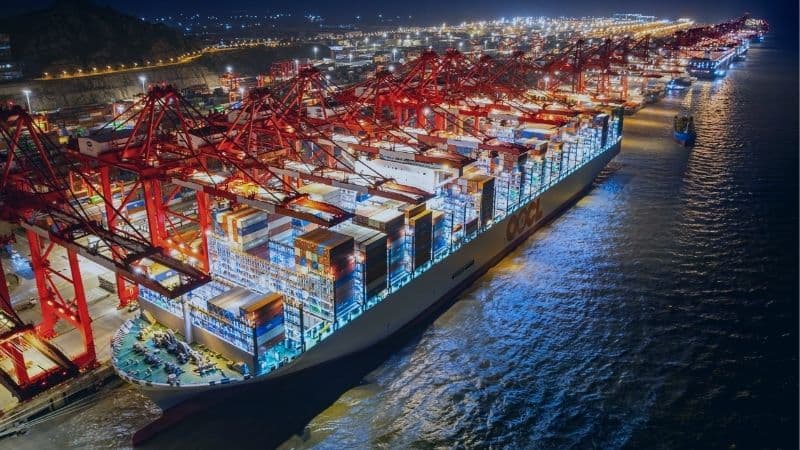
Supply chain trends 2026 are reshaping careers as much as operations. The biggest risk for candidates is not disruption; it is being outpaced by the skills market. Companies are investing heavily in transformation but consistently struggling to hire people who can execute against that change. That gap is where the strongest career opportunities sit, particularly for candidates who understand how these trends are translating into hiring decisions.
Artificial intelligence becomes core infrastructure
AI is now embedded across forecasting, planning, and logistics systems, particularly in sectors like FMCG, retail, and manufacturing where demand variability is high. Companies are using AI-driven platforms to improve forecast accuracy, reduce excess inventory, and respond faster to changes in demand patterns. This is no longer a future state; it is already part of day-to-day operations in many large organisations.
There is a clear divide in the talent market. Candidates who understand how to work with systems like SAP IBP, Kinaxis, or other advanced planning tools are moving significantly faster through hiring processes. In contrast, candidates who rely purely on manual planning or spreadsheet-based approaches are being filtered out earlier. AI does not remove decision-making; it changes it. Businesses still need people who can interpret outputs, challenge anomalies, and make informed calls under pressure, which is where the real value now sits.
Shift from efficiency to resilience
Supply chains are no longer designed purely around cost efficiency. Disruption over the past few years has exposed how fragile lean models can be, particularly when companies rely too heavily on single suppliers or long-distance logistics networks. As a result, resilience has become a core design principle, with businesses building redundancy, diversifying sourcing, and investing in contingency planning.
This is translating directly into new hiring requirements. More roles are now focused on network design, risk management, and scenario planning, particularly at a senior level. Several pharmaceutical and manufacturing organisations have introduced leadership roles dedicated to supply chain resilience, covering supplier risk, continuity planning, and response strategies. Candidates who have experience managing disruption, such as navigating supplier failures or rapid demand shifts, are now seen as significantly more valuable than those who have only worked in stable environments.
For candidates, this is an area to actively build capability:
- Develop experience in risk management and scenario planning
- Build knowledge of network design and supply chain modelling
- Gain exposure to disruption response, supplier failure, and demand shocks
- Understand end-to-end supply chain visibility and contingency planning
- Invest in upskilling to move into resilience-focused roles
Regionalisation and nearshoring
Global supply chains are being rebalanced, with companies moving production closer to key demand markets to reduce risk and improve responsiveness. This shift is particularly visible in industries with high exposure to geopolitical tension or long lead times, such as automotive, electronics, and industrial manufacturing.
There are clear examples of this in practice. Whirlpool has expanded manufacturing in Mexico to shorten supply chains and improve delivery efficiency into the US market, while Boeing relies on nearshored production through suppliers like Safran in Mexico for key aircraft components. In Europe, automotive supplier Teknia has invested in manufacturing sites across Poland and the Czech Republic to stay close to major OEM hubs.
For candidates, this is changing where opportunities sit. Hiring activity is increasing in Eastern Europe and Mexico, alongside continued demand in established markets. Candidates with local market knowledge or the flexibility to relocate are often accessing faster career progression, particularly in regions where demand is growing faster than the available talent pool. It is worth taking a closer look at roles in these markets as demand continues to build.
Rising cost pressures across the network
Cost volatility across transport, labour, and raw materials is forcing supply chain teams to take on greater commercial responsibility. The supply chain function is no longer judged purely on service levels or operational efficiency; it is expected to actively protect margins and contribute to financial performance.
This is driving a shift in how roles are defined, with increased demand for candidates who can operate across both operations and procurement, with responsibilities that include supplier negotiation, cost modelling, and contract management. A recent manufacturing search, for example, required a Supply Chain Manager to take ownership of both logistics performance and supplier cost strategy, reflecting how integrated these decisions have become.
Every supply chain decision, from routing to sourcing to inventory levels, has a direct financial impact. Candidates who can connect operational decisions to business outcomes are consistently outperforming others in the hiring process.
End-to-end visibility through digital tools
Real-time visibility across the supply chain is now a baseline expectation. Companies are investing in control towers, tracking systems, and integrated platforms to gain a clearer view of inventory, supplier performance, and logistics activity across multiple regions.
The real challenge, however, is not collecting data; it is making it usable. There is growing demand for roles that sit between operations and technology, such as Control Tower Managers and Supply Chain Analytics Leads. These roles are responsible for interpreting data, identifying risks, and coordinating responses across complex networks. As networks become more interconnected, companies need people who can translate data into action, rather than simply monitor performance.
Automation across logistics and warehousing
Automation is expanding rapidly across warehouses and logistics operations, particularly in high-volume environments such as e-commerce and retail distribution. Robotics, automated picking systems, and advanced routing tools are being deployed to improve efficiency and reduce reliance on manual labour, changing the structure of teams significantly.
At the same time, there is a noticeable gap in mid-level talent who can bridge the divide between technology and operations. Companies are struggling to find individuals who can manage automated systems while still leading teams and maintaining performance on the ground, creating a bottleneck in some transformation programs.
Sustainability moves into operations
Sustainability is now embedded into supply chain decision-making, driven by both regulatory pressure and corporate targets. Companies are redesigning supplier networks, reducing emissions, and integrating sustainability into procurement and logistics strategies. Schneider Electric, for example, has expanded regional manufacturing to reduce transport emissions as part of its broader sustainability strategy. Supply chain teams are increasingly expected to consider environmental impact as part of everyday decision-making, not just cost and service.
Cybersecurity and supply chain risk increase
As supply chains become more digital and interconnected, they also become more exposed to cyber risk. A disruption at one supplier can impact an entire network, making cybersecurity a supply chain concern rather than just an IT issue.
This is starting to influence hiring decisions, particularly in sectors where disruption has significant consequences. Early demand is emerging for candidates who understand both operational risk and digital exposure, especially in industries like pharmaceuticals and advanced manufacturing. Supply chain professionals are increasingly expected to have a broader understanding of risk, including how digital vulnerabilities can impact physical operations.
Workforce transformation and skills gaps
The structure of the supply chain workforce is changing quickly. Demand for digital, analytical, and strategic skills is increasing, while some traditional roles focused on manual processes or basic coordination are declining. A global retailer recently reduced its number of manual planning roles and replaced them with a smaller, more specialised team focused on analytics and exception management, a shift that is becoming more common as companies invest in systems and automation.
Skills shortages are most visible in planning, data, and systems roles. Companies are competing heavily for candidates with these capabilities, which is driving up salaries and increasing retention challenges.
For candidates, this creates a clear gap to act on:
- Building data skills, SQL, Excel, Power BI, Python
- Gaining experience with planning systems, SAP IBP, Kinaxis, Blue Yonder
- Strengthening scenario planning and decision-making skills
- Moving away from purely operational roles into more strategic work
- Investing in upskilling to stay aligned with where demand is growing
Geopolitical and trade instability
Trade tensions, tariffs, and regulatory changes are now constant variables in supply chain planning. Companies are being forced to adapt quickly to shifting policies and increasing complexity across sourcing and logistics strategies. There is growing demand for candidates with global experience and a strong understanding of trade compliance, with more roles focused on customs, tariffs, and multi-region operations, particularly in organisations with complex international footprints.
In many cases, companies are responding by diversifying their supplier base and spreading risk across multiple regions, creating additional demand for talent who can manage complexity and operate across different regulatory environments.
For candidates, this is a clear area to get ahead:
- Build knowledge of trade compliance, customs processes, and tariff structures
- Develop experience across multiple regions or international markets
- Understand regulatory frameworks impacting global supply chains
- Strengthen risk management and scenario planning skills
Where the market is moving
Across all supply chain trends in 2026, the direction is consistent. Companies are no longer hiring for narrow roles; they are looking for candidates who can operate across multiple areas and adapt to change.
The highest demand sits with candidates who combine operational experience with digital capability, commercial awareness, and exposure to complex environments. As this gap continues to widen, those who invest in developing these skill sets are seeing faster progression and stronger opportunities.
Next steps
If you are active in the market, timing matters. Many of these trends are still accelerating, and candidates who move early are benefiting from increased demand and reduced competition.
DSJ Global is working directly with organisations building these capabilities. Candidates who are positioning themselves effectively are those actively building the skills aligned to these shifts.
If you are ready to take the next step:
- Explore current supply chain roles to see where your experience fits
- Benchmark your profile against in-demand skill areas
- Focus on upskilling in high-growth areas such as data, systems, and risk
Acting now will put you ahead of the curve while demand continues to build.
If you are ready to take the next step, register your resume with DSJ Global to gain access to exclusive supply chain roles that are not advertised publicly, or explore the roles we are currently hiring for to see where your experience fits.
Let’s talk talent
Request a call back and one of our experienced consultants will get in touch to discuss your hiring requirements.
Advancing your career
Want to be one step ahead in your career? Our industry experts have the relationships and global reach to realize your full potential.